How to Wash and Care for Your BJJ Gear
BJJ gear care is not complicated, but it does require consistency. You're showing up to class in a gi or no-gi gear multiple times a week. That gear needs to be washed after every single session, stored properly, and treated with enough attention that it lasts.
This guide covers everything you need to know: gi care, no-gi gear, belt care, odor fixes, and storage. Keep it bookmarked and share it with any training partner who needs the reminder.
Quick Reference: Gear Care at a Glance
It's best to wash all of your gear in cold water on a gentle cycle with mild detergent. Hanging to airdry is preferred.
Gi
- No bleach
- Light vinegar to remove odor
Rash guard + spats
- No fabric softener
- Mesh bag to protect from Velcro
Belt
- No bleach
- Recommended to wash regularly
Shorts
- Close Velcro before washing
Why Gear Care Matters More Than Most People Think
Dirty gear is a health issue before it is an odor issue.
After every session, your gi and no-gi gear are carrying sweat, dead skin cells, and bacteria. Left in a bag or worn again without washing, that bacteria multiplies fast. Ringworm and staph infections spread on the mat when hygiene habits slip. These are not rare occurrences in BJJ training environments. They are predictable outcomes of poor gear care.
Clean gear also signals something about how you train. Showing up with washed, dry gear is basic respect for your training partners, your coaches, and the space you share within our community. What happens on our mats reflects the standards everyone brings to the room.
Your gear is also a real investment. A quality gi costs real money. Rash guards and spats are not cheap either. Proper care extends the life of everything you train in.
The One Rule That Matters Most
Wash your gear after every single session.
That is the foundation everything else builds on. Bacteria begin breaking down fabric and multiplying the moment you step off the mat. Leaving gear in a sealed gym bag for hours accelerates that process significantly.
If life gets in the way and you cannot wash immediately, do this: take your gear out of your bag and hang it somewhere with airflow. Do not let it sit compressed and damp. Hanging it buys you time. Leaving it balled up in a bag does not.
This applies to every piece of gear you trained in: gi top, gi pants, belt, rash guard, spats, and shorts. All of it.
How to Wash Your Gi
Before the Wash
Start before you load the machine.
If you picked up a stain during training, address it immediately with cold water and a small amount of detergent. Do not let it sit. Stains that dry into gi fabric are significantly harder to remove.
Turn your gi top and pants inside out before washing. The inside of the fabric takes on more sweat and bacteria than the outside, and washing inside out gives the dirtier surface direct contact with the water and detergent. It also protects the color, any patches, and embroidery from wear.
Tie your drawstrings before they go into the machine. Loose drawstrings tangle and can pull out of the waistband casing.
Washing Settings
Use cold water. Hot or warm water causes cotton fabric to shrink and weakens the weave over time. Cold water cleans effectively and keeps your gi at the size it is supposed to be.
Use a mild detergent. Bleach is not an option, even on white gis. Bleach weakens cotton fibers, causes yellowing over time, and shortens the life of the fabric. For stubborn stains on a white gi, OxiClean is a much safer choice. Apply it directly to the stain before washing, but only when absolutely necessary.
For colored gis, use a detergent formulated for darks. This preserves color from the first wash onward.
Wash no more than two gis at a time. Gi fabric is dense. Packing the machine too full means your gear does not get a proper wash.
Add half a cup of white vinegar to the rinse cycle. Vinegar neutralizes odor-causing bacteria and helps preserve color. It does not leave a scent once the gi dries.
Drying Your Gi
Air drying is the right call. Hang your gi on a rack or a line after washing. Give it space to breathe rather than folding it over a single bar without wrinkles or overlapping pieces.
For colored gis, keep them out of direct sunlight. UV exposure fades color over time. For white gis, sun drying is actually beneficial. Natural UV exposure kills bacteria.
We don't recommend using a dryer. But if you do, use the lowest heat setting and take the gi out while it is still slightly damp. Overdrying causes shrinkage and makes the fabric stiff. A slightly damp gi on a hanger finishes drying fine without damage.
Never put a gi away damp. A closed closet with a damp gi is a mildew problem waiting to happen.
How to Wash Your No-Gi Gear
No-gi gear, including rash guards, spats, and shorts, is made from synthetic fabrics like polyester and spandex. The wash rules are similar in principle but differ in a few important ways.
Rash Guards and Spats
Wash after every session. Synthetic fabrics trap bacteria and odor quickly, and the tighter weave means buildup happens faster than you might expect.
Use cold water, a gentle cycle, and a mild detergent. Skip fabric softener entirely. Fabric softener coats the fibers and degrades the moisture-wicking properties of the fabric. Over time, a rash guard washed regularly with softener will feel different and perform worse.
Turn rash guards and spats inside out before washing. Same logic as the gi: the inside surface is dirtier and needs the direct contact with water.
Keep your rash guards and spats away from Velcro in the wash. Velcro grabs synthetic fabric and causes pilling and tearing. If you are washing them with other gear that has Velcro closures, put your rash guards and spats in a mesh laundry bag first.
Hang dry only. Dryer heat breaks down the elasticity of synthetic fabrics. A rash guard that gets run through a hot dryer repeatedly will lose its fit and its function faster than one that is always hung to dry.
Shorts
The same cold water, gentle cycle approach applies to grappling shorts.
One extra step: close any Velcro fasteners before the shorts go into the machine. Open Velcro in a washing machine will find something to grab.
Air drying is preferred for shorts. If you need to use a dryer, low heat is acceptable, but hang dry is the better habit.
Belt Care (and the Myth You Have Probably Heard)
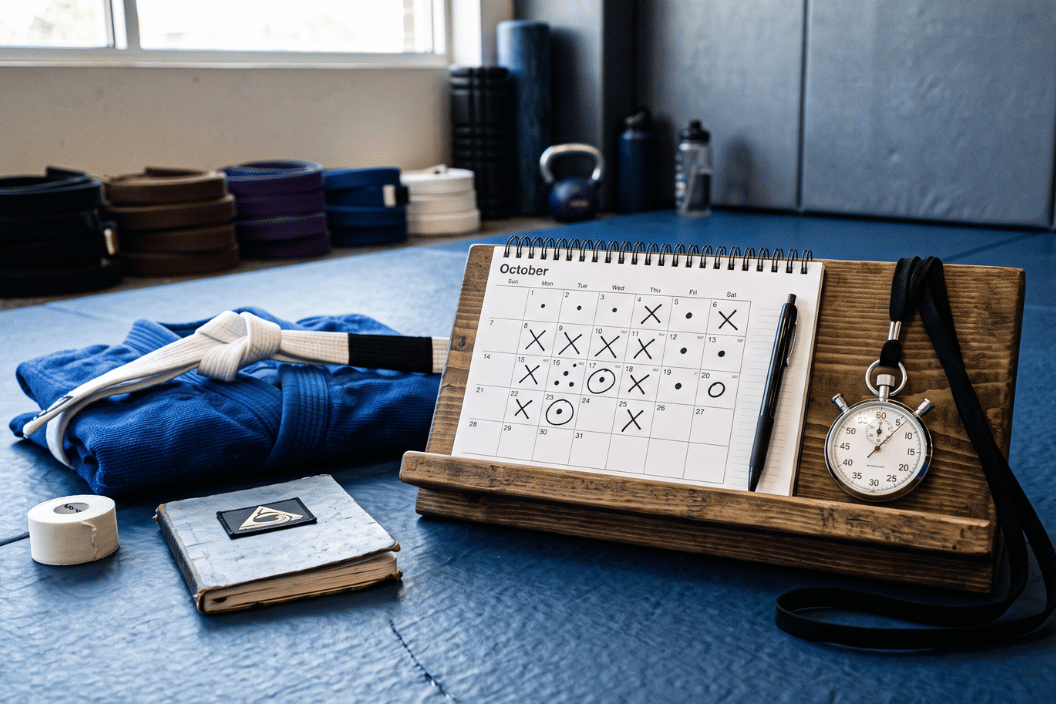
Your belt absorbs as much sweat as anything else you train in. Wash it.
The idea that washing your belt washes away your rank is a persistent myth in BJJ. Your rank lives in the time you have put into your training, the techniques you have drilled, and the rounds you have survived. The color of the fabric has nothing to do with it.
Wash your belt in cold water on a gentle cycle and hang it to dry. That is all it needs. A clean belt is part of clean gear.
Dealing with Persistent Odor
If your gi or rash guard still smells after a normal wash, the issue is likely biofilm: a layer of bacteria that has established itself in the fabric and that standard detergent does not fully break down.
A vinegar soak handles most cases. Fill a basin or tub with cold water, add one cup of white vinegar, and submerge the gear for 20 to 30 minutes before washing as normal. This disrupts the bacterial layer that is causing the odor.
Baking soda is another effective option. Add two tablespoons directly to the wash cycle along with your regular detergent. It neutralizes odor-causing compounds at the source.
For stubborn cases, look for an enzyme-based detergent marketed for activewear or sports gear. These detergents are formulated to break down the organic compounds (body oils, proteins from sweat) that feed odor-causing bacteria. Standard laundry detergent handles surface dirt well. Enzyme-based options go deeper.
One thing to avoid: masking the odor with heavily scented detergent or fabric softener. That approach layers a new smell over the problem without fixing it. A week later, the funk is back.
Storage and Rotation
Storage
Never store gear while it is damp. A sealed environment with damp fabric grows mildew fast. Mildew smell in a gi is extremely difficult to fully remove.
Use a ventilated gym bag rather than a sealed duffel. Mesh construction or a bag with ventilation panels allows airflow after class, which slows bacterial growth while your gear waits to be washed.
Hang gis when possible rather than folding them for long-term storage. Dense gi fabric holds folds and creases over time. Hanging keeps the fabric in better shape between sessions.
Rotation
It's best to rotate between at least two gis. Each gi needs time to dry completely between sessions before it goes back into use. Training every day with a single gi does not give it that time, which means you are putting on gear that is still breaking down between wears.
The same logic applies to rash guards and spats. A two-piece rotation for no-gi gear is the practical minimum for anyone training several times a week.
Gear Care Is Part of Showing Up Right
The habits that make a good training partner are the same ones that carry over to how you treat your gear. Showing up consistently, doing the maintenance, not cutting corners.
Every class at SJJC starts with people who respect the space, respect their partners, and show up prepared. Clean gear is part of that preparation.
If you are new to BJJ and want to see what training at Southside Jiu Jitsu Club looks like from day one, start with a free goal-setting consultation.
There is no pressure and no commitment. You come in, talk with a coach, and get a clear picture of what the 6 Week Transformation Challenge looks like before you make any decisions.
Frequently Asked Questions
How often should I wash my BJJ gi?
After every session. There is no situation where wearing a gi twice without washing is the right call.
Can I put my gi in the dryer?
Air drying is best. If you have to use a dryer, be sure to use the lowest heat setting. Heat causes shrinkage and stiffens the fabric over time. If you use a dryer, take the gi out while it is still slightly damp.
Why does my gi still smell after washing?
Persistent odor usually means bacteria have built up a layer in the fabric that standard detergent is not fully removing. Try a white vinegar soak before washing, add baking soda to the wash, or switch to an enzyme-based activewear detergent.
Should I wash my belt?
Yes. Your belt absorbs sweat just like the rest of your gear. Washing it does not affect your rank in any way.
Can I use bleach on a white gi?
No. Bleach weakens cotton fibers and causes yellowing over time. Use OxiClean for stain treatment on white gis instead.
How do I wash a rash guard?
Cold water, gentle cycle, mild detergent. No fabric softener. Turn it inside out. Hang dry only. Keep it away from Velcro in the wash.
How many gis do I need?
At least two is best if you are training more than twice a week. Rotating between gis gives each one time to dry fully between sessions and extends the life of both.
Previous Blogs