Should I Do BJJ or Muay Thai?
The question "should I do BJJ or Muay Thai?" comes up more than you'd expect, and not just from beginners. Strikers who want a ground game, gym-goers weighing two radically different training styles, and people who've dabbled in one discipline and are considering the other all find themselves asking it eventually. Anyone training competitively for MMA will train in both BJJ and Muay Thai, so it's important to know the focuses, advantages, and watchouts for each while you're getting started.
Neither art is universally better. They solve different problems, produce different training experiences, and suit different temperaments. This breakdown covers the meaningful differences in training structure, fitness outcomes, self-defense application, and competition so you can make a real decision rather than defaulting to the "just train both" non-answer.
Two Different Disciplines, Two Different Ranges
Brazilian Jiu-Jitsu is a grappling art. Its central question: once two people are in contact and the fight reaches the ground, who controls the situation? BJJ teaches clinching, positional dominance, and submissions - chokes and joint locks designed to end a fight without striking. The art evolved from Japanese judo brought to Brazil in the early 1900s and developed into the systematic ground-fighting system it is today.
Muay Thai is a striking art. Its central question runs in the other direction: before contact, in stand-up range, who controls the exchange? Known as the "Art of Eight Limbs," Muay Thai uses fists, elbows, knees, and shins to strike from multiple angles. It originated in Thailand as a military combat system and is now one of the dominant stand-up disciplines in professional MMA.
The two arts cover different ranges of a fight. They don't so much compete with each other as answer different questions. Which question you're most interested in working on is the first step toward a real decision.
How BJJ & Muay Thai Train
What BJJ Training Looks Like
A BJJ class typically opens with a warmup, moves into technique drilling, and closes with rolling - live sparring with a training partner at full resistance, where both people are applying techniques under pressure. Rolling is the core of the practice. It happens without strikes, which means the injury risk is significantly lower than in striking arts, and practitioners can go hard on the mat multiple times per week.
Most beginner classes focus on foundational positions: closed guard, side control, mount, and back control. The early work is learning how to get there, how to hold it, and how to escape when your partner has it. The technical depth is substantial, and developing the ability to read what's happening on the ground takes real time.
BJJ is trained in the Gi (the traditional uniform with jacket and pants) or No-Gi (shorts and a rash guard). Both formats have active competition scenes and their own technique considerations.
What Muay Thai Training Looks Like
Muay Thai training is heavily pad-based. Sessions involve combination sequences on heavy bags, holding pads for a partner, and shadowboxing to develop footwork and striking patterns. Sparring exists in Muay Thai, but the physical contact is higher than in BJJ rolling. Head and body contact are part of the practice, and the cumulative wear on the body is greater.
The technical demands are real. Developing power, timing, and distance management in striking takes years of repetition. The clinch game, where Muay Thai fighters control opponents at close range using knees and sweeps, is its own technical sub-discipline within the art.
Fitness Benefits of BJJ vs Muay Thai
BJJ for Functional Strength and Body Awareness
Grappling demands constant engagement of the core, hips, and upper body. BJJ builds grip strength, flexibility, and the kind of functional endurance that comes from wrestling a resisting partner for extended rounds. Because rolling can be done at high intensity without the head contact that characterizes striking sparring, practitioners can train frequently without long recovery windows between sessions.
Muay Thai for Cardiovascular Conditioning
Muay Thai produces significant cardiovascular output. The combination of footwork, striking drills, and bag work burns calories at a high rate and builds explosive power in the lower body. The tradeoff is that hard sparring carries more contact, particularly to the shins and head, and typically requires more recovery time between sessions.
For pure cardio output, Muay Thai has a clear edge. For training frequency and long-term physical sustainability, the lower-impact structure of BJJ rolling is the advantage.
Self-Defense: BJJ vs Muay Thai
BJJ's self-defense case is built on leverage and control. The art is specifically designed to allow a smaller practitioner to control and submit a larger attacker, not by striking harder, but by understanding body mechanics and positional advantage. A basic choke or joint lock learned in a fundamentals class is a real tool in a real situation. BJJ also addresses something most martial arts skip: what to do when the fight goes to the ground and someone is on top of you.
Muay Thai's case is built on distance management. Effective striking with elbows, knees, and kicks can create space, deter a threat, and end a confrontation before it reaches the ground. Muay Thai conditioning also develops the composure to stay functional under physical stress, which matters as much as technique in any real-world situation.
Neither art is a complete system by itself. But both produce genuine capability in ways most martial arts do not. For a deeper look at how BJJ applies in practical situations, see Jiu-Jitsu for Self-Defense →
BJJ vs Muay Thai Competitions
BJJ Competition
BJJ has an accessible amateur competition scene at every experience level. Local opens, regional tournaments, and national events are available to practitioners across all belt levels, and many students compete within their first year. Entry-level BJJ competition doesn't require absorbing strikes, which lowers the barrier significantly for anyone stepping into a competitive setting for the first time.
Muay Thai Competition
Muay Thai competition involves full contact. Training for an amateur bout requires a dedicated preparation period, and the physical toll is substantially higher than recreational Muay Thai training. Most practitioners carry a longer runway before competing, and the commitment required differs significantly from signing up for a local grappling tournament.
Which Should You Choose?
The right choice comes down to what draws you in, what keeps you consistent, and what you want the training to produce. Here is a direct framework:
Start with BJJ if:
- Ground control, submissions, and the technical problem-solving of grappling are what interest you
- You want to train hard multiple times per week with a lower injury risk
- Self-defense capability against a larger, stronger person is a priority
- You want a competition path that doesn't involve taking strikes to the head
Start with Muay Thai if:
- Striking is what excites you: footwork, combinations, the stand-up game
- High-intensity cardio and explosive conditioning are the primary fitness goal
- The physical discipline and training culture of striking arts appeals to you specifically
If your goal is MMA: Both arts are foundational, and most coaches recommend gaining real competency in one before adding the other. Splitting time too early typically means slower progress in both.
Starting BJJ on Chicago's Southside
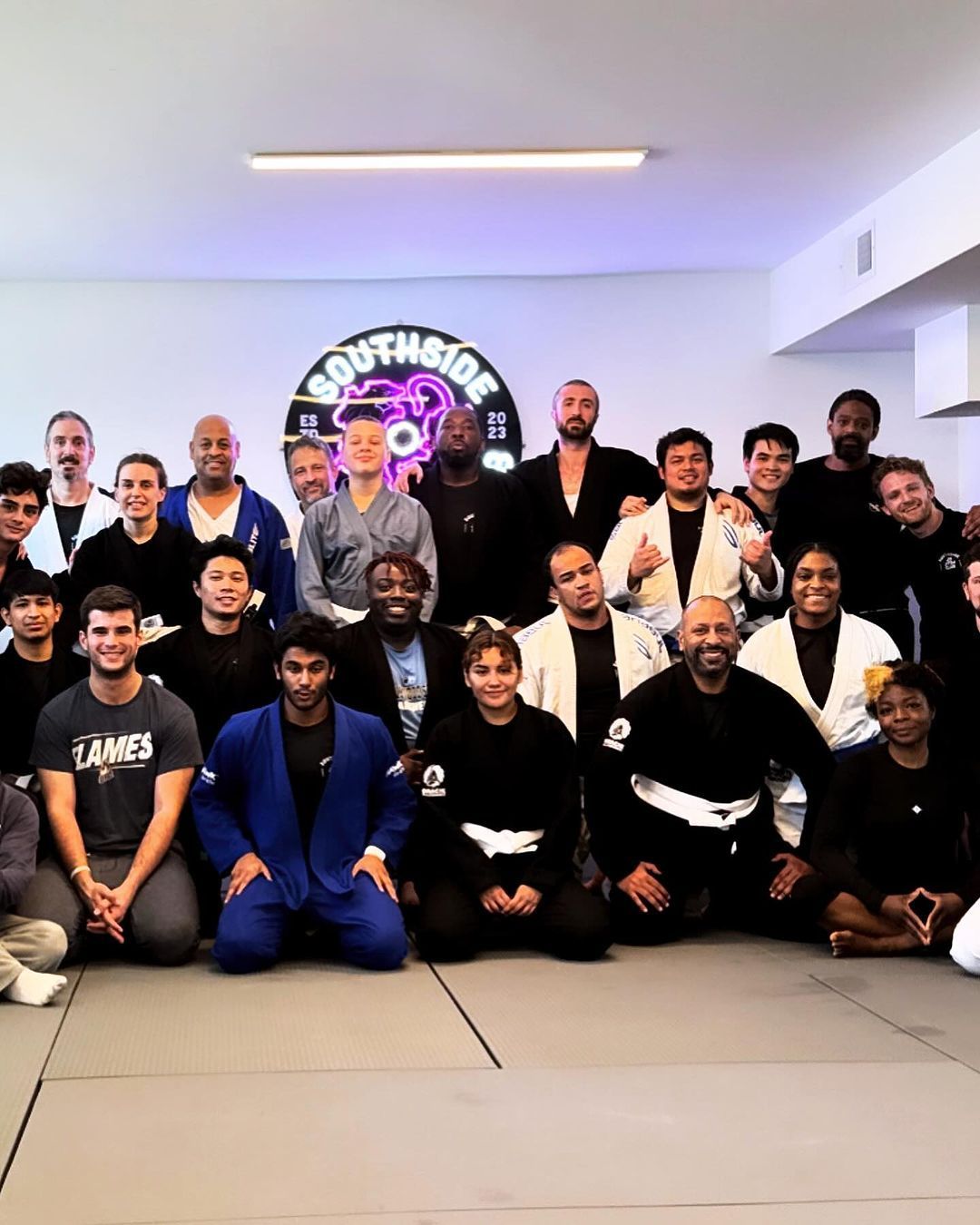
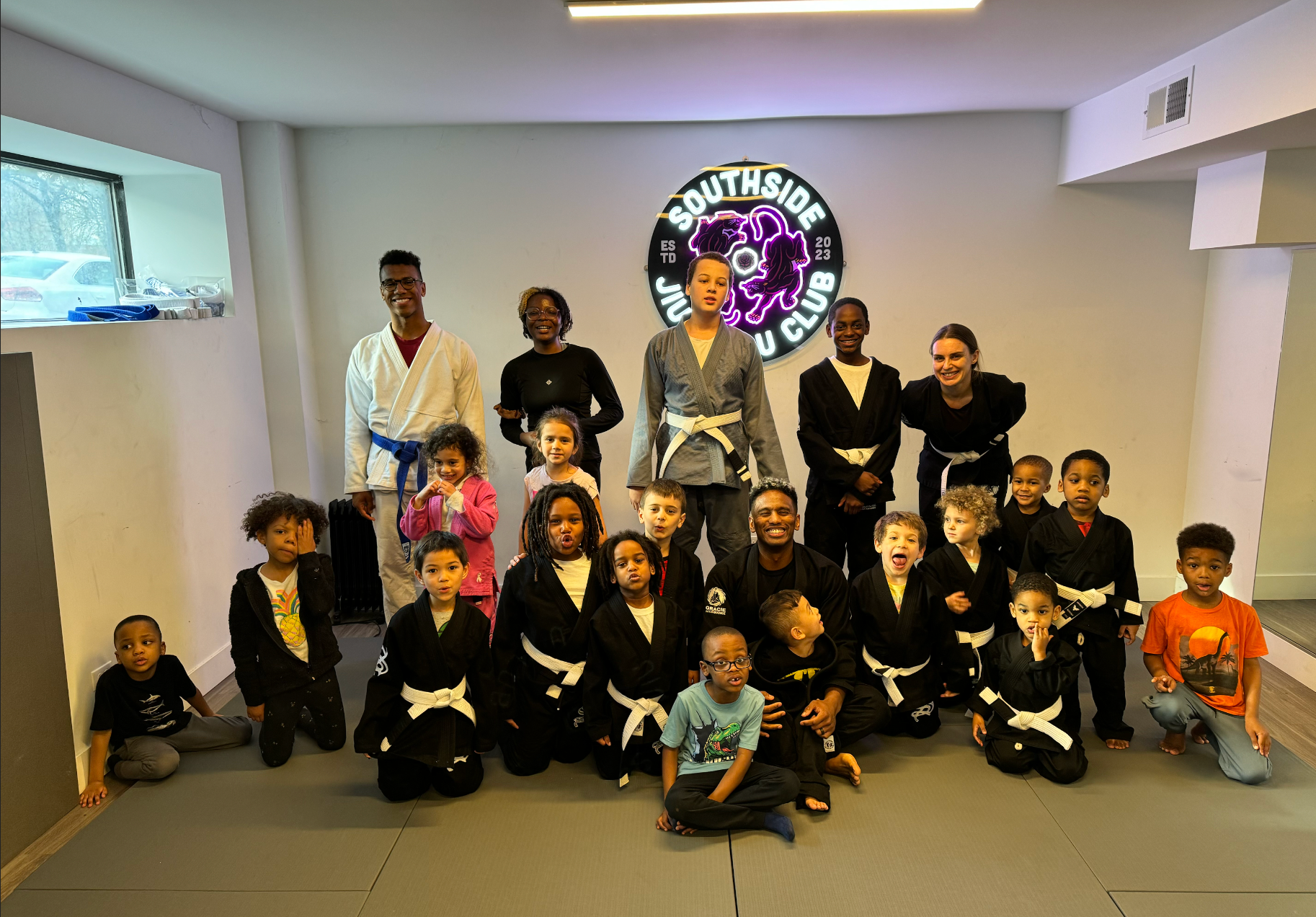
If you've decided BJJ is where you want to start, the next step is straightforward: come in, talk through your goals, and get on the mat. Every student at Southside Jiu Jitsu Club begins with a structured on-ramp designed to build real foundational skills, not just exposure to the art.
The coaching staff works with students at every starting point, and the training environment is built for people who are serious about learning. The free consultation exists so you can see the facility, meet the coaches, and ask whatever questions you have before committing to anything. Book yours and we'll take it from there.
Frequently Asked Questions
Can I train BJJ and Muay Thai at the same time?
You can, but most coaches suggest committing to one for at least six months before adding the other. Early focus typically produces faster results in both disciplines over the long run. As long as you can balance both and ensure you're prioritizing recovery and taking care of yourself, it's absolutely possible to train both.
Which is more beginner-friendly, BJJ or Muay Thai?
BJJ tends to be more accessible for day-one students. Rolling allows beginners to spar at full resistance without absorbing strikes, which means the feedback loop is faster and the physical cost of early mistakes is lower. Muay Thai sparring carries more contact from the start, and most programs introduce it gradually to manage the impact on new students.
Which is better for MMA, BJJ or Muay Thai?
Both are essential. Most serious MMA fighters train Muay Thai for stand-up striking and BJJ for the ground game, and coaches typically consider them two of the four foundational disciplines in the sport alongside wrestling and boxing. If MMA is the long-term goal, which art you start with matters less than building real competency in one before adding the other.
Previous Blogs