Does Strength Training Help With BJJ?
If you already train jiu jitsu a few times a week, you have probably wondered whether you should be lifting weights too. And right behind that question is the worry that goes with it: will strength training actually help my BJJ, or will it just turn me into someone who muscles every position instead of learning to do it right?
Here is the honest answer. Yes, strength training helps your jiu jitsu. Coaches see it, and the research backs it up. But it helps for one specific reason, and missing that reason is where people go wrong. Strength supports good jiu jitsu. It does not replace it. The real question is not whether to lift, it is how to add it so that it works for your game instead of against it. That is what this article is about.
Strength Training Helps, but Technique Comes First
Strength training is one of the better things you can add to your routine as a grappler. It makes you harder to move, harder to submit, and a lot harder to injure. Almost nobody who coaches at a high level argues against it anymore.
The catch is the order of operations. Strength is a multiplier on top of technique. If your technique is sound, getting stronger makes everything you already do more effective. If your technique is shaky, getting stronger just lets you cover the gaps with effort, which feels fine for a while and then stops working the moment you roll with someone better. So the answer comes with a condition attached. Lift, but never let it become a substitute for time on the mat.
Why Technique Still Wins
Jiu jitsu is built on leverage, timing, and position. That is the whole reason a smaller, more technical grappler can control a much bigger one. The art exists because skill beats size more often than not.
Every coach has watched a newer student bench their way out of a bad spot and walk off the mat thinking they solved something. They did not. They borrowed against their technique, and the bill always comes due against a more experienced partner. Muscling out of trouble is a habit that hides problems instead of fixing them.
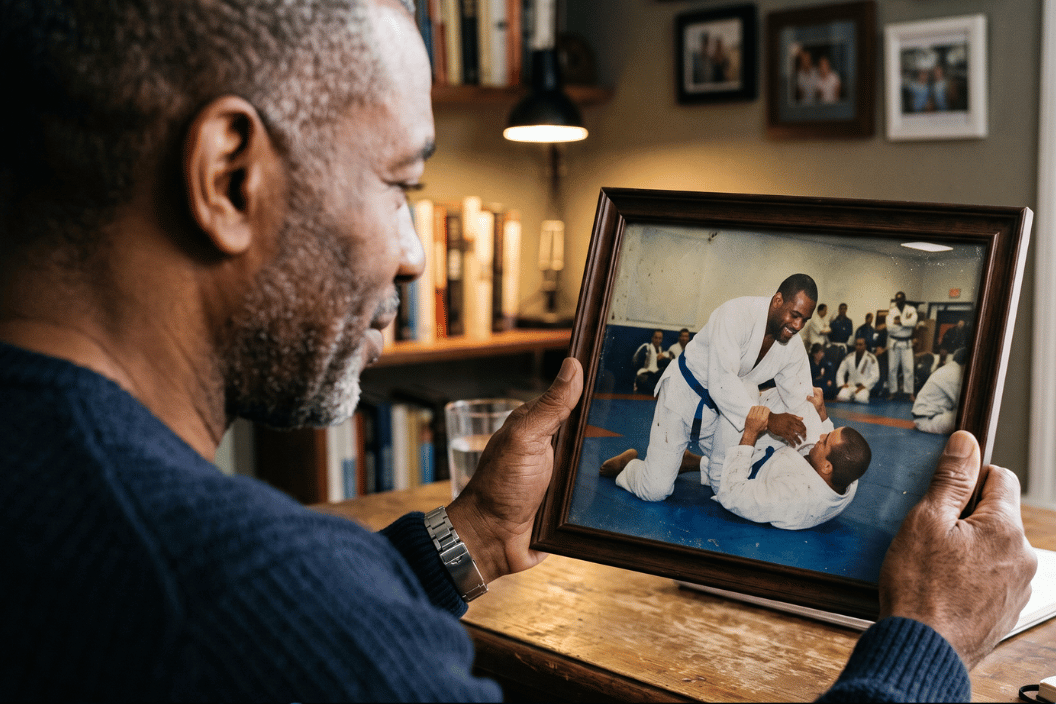
You can see the same truth from the other direction in what people call old man jiu jitsu. Grapplers who have been training for decades stop relying on speed and power as those attributes change with age. They lean harder on leverage, positioning, and efficiency, and they keep dominating younger, stronger training partners. That is the clearest proof there is that technique sits at the foundation. Strength is the thing you build on top once the foundation is solid.
What Strength Training Actually Does for Your Jiu Jitsu
Building It Into Your Training at SJJC
At Southside Jiu Jitsu Club on Chicago's Southside, the priority is technical, sustainable jiu jitsu, and strength work is treated as support for that rather than a thing of its own. Solo Dixon and the coaching staff have spent years helping students get stronger in ways that serve their game instead of distracting from it. For most new students, the 6 Week Transformation Challenge is the natural starting point. It builds the consistent training habit first, which is the right base to layer any strength work on top of later.
Frequently Asked Questions
Do I need to lift weights to be good at BJJ?
No. Plenty of skilled grapplers never touch a barbell. But strength training is one of the best ways to stay healthy and keep progressing, so it is worth adding if you can fit it in.
Will strength training make me slow or stiff for jiu jitsu?
No. That is one of the oldest myths in grappling. Sensible strength work tends to improve how you move. Real bulk and stiffness take a deliberate effort that is more in the realm of "body building" than strength conditioning that a couple of sessions a week will not produce.
How many days a week should I strength train alongside BJJ?
One or two sessions is enough for most people, planned around your hard mat days so the lifting supports your training instead of wearing you out.
Should beginners strength train or just focus on classes?
Focus on classes first. Consistent mat time is the priority when you are new. Light strength work is a fine addition, but it should never come at the expense of showing up.
Is BJJ enough of a workout on its own?
BJJ builds real strength and conditioning, but it rarely takes you into the heavy, low-rep ranges that build maximum strength. That gap is exactly what dedicated lifting fills.
Ready to Get Stronger on the Mats?
Stronger, healthier, and better at jiu jitsu is a goal worth chasing, and the path there is simpler than most people expect: train smart, lift in a way that supports your technique, and stay consistent. If you want help figuring out where you are and where you want to go, the first step is a conversation. Book your free consultation and we will map it out together.
List of Services
-
Protects You From Injury (The Biggest Reason)List Item 1
This is the benefit worth leading with, because it is the one with the most evidence behind it. Grappling carries a real injury rate. One study of more than a thousand BJJ practitioners found that close to seventy percent will lose at least two weeks of training to injury over a few years of rolling. Time off the mat is the thing that slows your progress more than anything else.
Strength training is one of the few interventions shown to lower that risk. Stronger tendons, ligaments, and a strong posterior chain protect your lower back during scrambles, your shoulders when you post and frame, and your knees when a roll goes sideways. A resilient body simply holds up better to the awkward, sudden positions BJJ puts you in.
Your training surface matters here too. The FUJI spring floor mats at Southside Jiu Jitsu Club are built to absorb impact and take some load off your joints, and a body you have strengthened deliberately is the other half of staying healthy enough to keep showing up. For more on finding a sustainable rhythm.
-
Stronger Positions, Grips, and FramesList Item 2
Past injury prevention, strength shows up directly in your game. Grip strength is the obvious one. Controlling sleeves, collars, and limbs is a grip battle, and a stronger grip wins more of those exchanges. Your hips and posterior chain power your bridges, your sweeps, and your ability to retain guard. And stronger frames hold up late in a roll, when you are tired and your posture would otherwise start to fall apart. That last point is underrated. A lot of positions are not lost to better technique, they are lost to fatigue.
-
Longevity on the MatsList Item 3
There is a quieter benefit that pays off over years rather than rounds. When you are stronger and recover better, you can train more often without breaking down. More mat time means more reps, and more reps mean faster progress. For a beginner or for anyone past their mid thirties, this is the real prize. Strength work is what keeps you training consistently for the long haul instead of cycling through nagging injuries.
Pros & Cons
Pros of Strength Training + BJJ
The upside is straightforward. You get fewer injuries and less time away from training. Your technique becomes more effective under pressure and against bigger partners. And you get better conditioning and overall fitness along the way, which for a lot of people was the reason they walked into a gym in the first place.
Cons & Traps of Combining BJJ and Strength Training
The downsides are real enough to take seriously. Start with the worry most people have, which is getting bulky and stiff. It is mostly a myth. Building noticeable size takes an enormous, deliberate effort in the gym and the kitchen, and it does not happen by accident from a couple of sessions a week. Strength and mobility are not opposites either. Sensible lifting tends to improve how you move, not restrict it.
The risk that actually deserves your attention is overtraining. Stacking heavy lifting on top of hard rolls leads to fatigue, worse performance on the mat, and a higher chance of injury. That is the exact opposite of what you were going for. Your time and energy are not unlimited. If strength work starts eating into your sleep, your recovery, or your class attendance, it has become a net loss no matter how good the workout felt.
How to Add Strength Training Without It Backfiring
Make It Fit Your Schedule, Not the Other Way Around
You need far less than you think. One or two focused strength sessions a week is enough to see a real difference. If the point is to support your jiu jitsu, build the lifting around your mat schedule rather than forcing your training to bend around the gym. Go heavier with strength conditioning on lighter BJJ days, and keep it moderate when your mat volume is high
Keep Technique the Priority
When something has to give, mat time wins. Strength work fills in the gaps, it does not get to replace a class. Keep your lifting simple and useful. Compound movements plus dedicated grip, hip, and core work will do far more for your grappling than chasing a bigger number on any single lift.
Recover, Fuel, and Listen to Your Body
Training is only half of it. Sleep, nutrition, and rest are what turn the work into actual progress. Skip those and more volume just digs the hole deeper. Our BJJ nutrition and hydration guide covers the fueling side in detail. The simplest gauge is your own performance. If your lifting is making your rolls worse, or you feel sore and drained all the time, that is your signal to pull back. Keeping strength training positive means staying honest about whether it is actually helping.
Beginner vs. Experienced
Where you are in your journey also changes the answer. If you are newer to jiu jitsu, your single best move is showing up to class consistently. Light, simple strength work and good basic movement are plenty at this stage, and the habit of regular training matters more than any strength program.
Our BJJ Fundamentals class is where that base gets built. If you are more experienced or thinking about competing, a more structured strength and conditioning plan makes sense once your skills and your schedule are solid. That is the point where targeted work in Advanced BJJ really starts to pay off.
Not sure how to balance lifting with your mat schedule? That is exactly the kind of thing worth mapping out before you guess at it. You can talk it through in a free goal-setting consultation.
Previous Blogs