What is Brazilian Jiu Jitsu (BJJ)?
What Is Brazilian Jiu-Jitsu?
Brazilian jiu-jitsu, usually shortened to BJJ, is a grappling-based martial art. Instead of punches and kicks, it uses leverage, body position, joint locks, and chokes to control another person and, if needed, force them to submit. The whole art rests on one idea: a smaller, calmer, more technical person can control someone bigger and stronger. That is why people call it the "gentle art".
If you have ever wondered what BJJ actually is, whether it might be for you, or whether it could be a good fit for your kid, this guide covers the essentials. It is a high-level look at what the art is, where it came from, what makes it different, and what starting looks like here in Chicago's Southside.
How It Works on the Mat
A BJJ match usually moves to the ground. The goal is to take an opponent down, work into a dominant position, and from there finish with a submission or simply hold control. You will hear positions named over and over as you learn: guard, mount, side control. The finishes fall into two broad buckets, chokes and joint locks.
What separates BJJ from a lot of martial arts is live sparring, which practitioners call "rolling". You practice against a fully resisting training partner, not a cooperative one. That is the part that makes the skill real. You find out quickly what works under pressure and what does not, and you get better because the feedback is honest.
How BJJ Is Different From Other Martial Arts
Striking arts like boxing or Muay Thai are built around hitting and not getting hit. BJJ takes a different path. It lives on the ground, where control is easier to hold and where leverage does the heavy lifting. Size and aggression still matter, but they matter far less than position, timing, and technique.
That difference is the reason BJJ travels so well across body types and ages. A new student does not need to be the strongest person in the room. They need to learn where to put their weight, how to stay calm, and how to use angles. Those are learnable skills, and they reward patience over power.
A Quick History of BJJ
BJJ grew out of Japanese jiu-jitsu and judo. In the early 1900s, a traveling Japanese judoka named Mitsuyo Maeda brought the art to Brazil. There, Carlos and Helio Gracie studied it and adapted it, refining a system that let a smaller practitioner neutralize a larger one through leverage and ground control rather than strength.
For decades the art spread slowly. That changed in the 1990s, when early mixed martial arts events put BJJ on a global stage and showed how effective ground fighting could be against other styles. From there it became a foundation of modern MMA and a respected art in its own right.
What Makes Brazilian Jiu-Jitsu Unique
The single thread that runs through everything in BJJ is leverage over strength. A well-timed technique beats muscle, and that holds true at every level of the art.
A few things follow from that:
- Live rolling builds tested skill. Because you train against resistance, you develop real instincts rather than memorized routines.
- It is genuinely practical for self-defense. Controlling distance and position, rather than trading strikes, gives a smaller person a real path to safety.
- The benefits reach past the mat. Training sharpens problem-solving under pressure, builds steady fitness, takes the edge off stress, and grows quiet confidence. None of that is hype. It comes from showing up and working through hard rounds with people who become friends.
The Belt Journey
BJJ uses a belt system that runs from white to black. Belts are earned slowly, through demonstrated skill rather than time served or classes attended, which is part of why a BJJ black belt carries the weight it does. Kids progress through their own set of belt colors suited to their age.
What to Expect When You Start BJJ
You do not need any experience to begin, and you do not need to arrive in shape. Beginners start with jiu jitsu fundamentals and partner drilling, learning core positions and movements at a controlled pace before any hard sparring enters the picture.
You will also hear two terms early on. Gi training uses the traditional uniform, and you use the fabric for grips and control. No-gi training skips the uniform and relies on body positioning, which makes the pace a little faster. Both build the same fundamentals, and many people train in both.
At Southside Jiu Jitsu Club, the on-ramp for new students is the 6 Week Transformation Challenge. It is a structured, supported start that includes a personal goal-setting consultation, a run of beginner-friendly classes, nutritional guidance, and accountability check-ins, so you are never guessing about what to do next. From there, students settle into regular training across the class schedule, beginning with BJJ Fundamentals.
BJJ for Everyone on Chicago's Southside
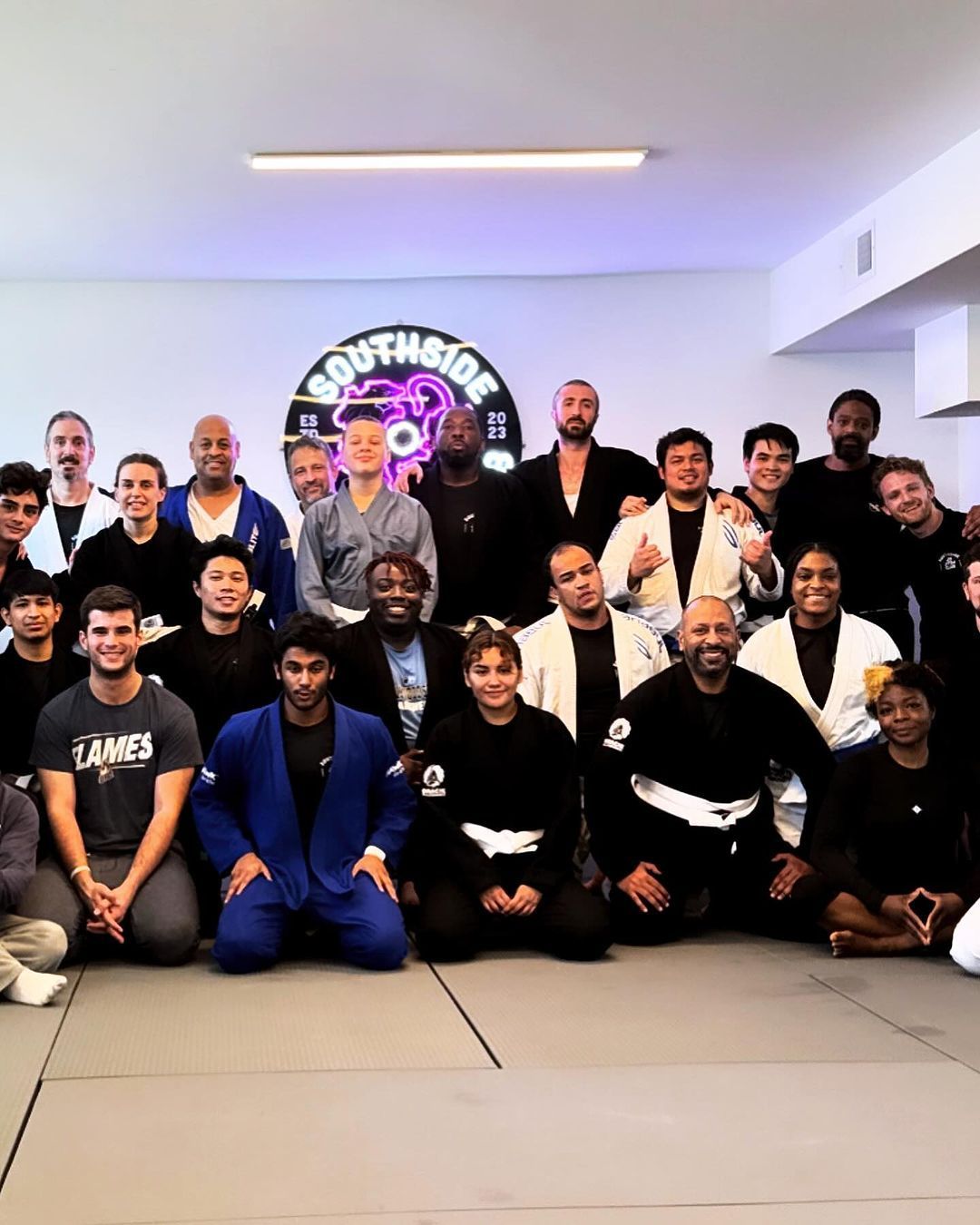
One of the best things about the art is how wide the door is. BJJ works for adults starting from zero, for women who want a comfortable place to learn, for kids, and for seasoned competitors. Here on the Southside, in Woodlawn, that range is the whole point.
Women's Jiu Jitsu
The Women's Jiu Jitsu class is a women-only class built to be beginner-friendly and comfortable while still being a real, challenging workout. It gives women a dedicated space to learn the art among other women who are starting and growing alongside them.
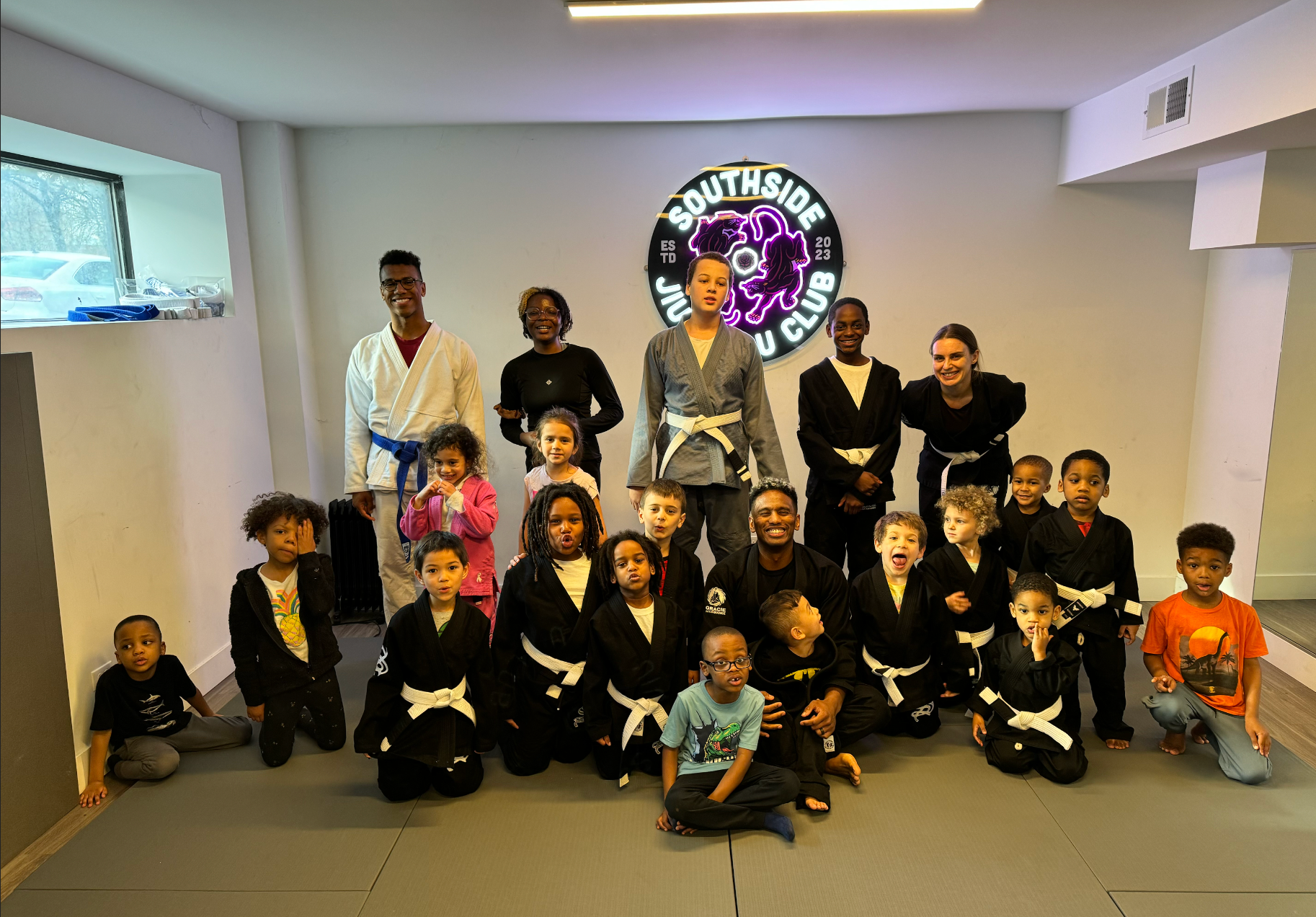
Youth BJJ for Kids
The Youth BJJ program focuses on confidence, discipline, and respect, the kind of practical growth parents actually notice at home and at school. The club has many families that train together and also hosts events, which give families a real community touchpoint beyond class time.
Experienced Practitioners and Competitors
If you already train, there is a place for you too. Advanced BJJ classes and Randori open mat sessions give experienced practitioners room to sharpen positional sparring and prepare for competition.
Real Lineage, Real Instruction
The instruction at Southside Jiu Jitsu Club is grounded in a deep respect and history for the art of BJJ. Founder and head instructor Solomon "Solo" Dixon is a 1st-degree black belt under Adem Redzovic, who is a 4th-degree black belt under Carley Gracie. That is a direct line back to the family that built the art, taught right here on the Southside.
The mats matter too. The club trains on a FUJI spring-floor system, which adds real cushioning and makes day-to-day training safer on your body. And the deeper reason the club exists is local: Solo, who lives in Woodlawn, sees BJJ as a tool for confidence, discipline, and community on the Southside. You can read more about Solo and our BJJ coaches and professors to get a fuller picture of who you would be training under.
Frequently Asked Questions
Is Brazilian jiu-jitsu good for beginners?
Yes. The whole on-ramp is designed for people with no experience. You start with fundamentals at a controlled pace, and the first step is a no-pressure consultation, not a hard class.
Do I need to be fit or athletic to start?
No. Plenty of people start BJJ to get in shape rather than the other way around. The art is built on technique, so you improve as you train rather than needing to arrive already conditioned.
Is BJJ effective for self-defense?
It is one of the most practical self-defense arts available, precisely because it teaches a smaller person to control a larger one through position and leverage instead of trading strikes.
What is the difference between gi and no-gi?
Gi training uses the traditional uniform for grips and control. No-gi skips the uniform and moves a little faster. Both build the same core skills, and many students train in both.
Is Brazilian jiu-jitsu safe?
Training is collaborative, beginners ease in gradually, and the FUJI spring-floor mats add cushioning. As with any contact sport there is some risk, but careful coaching and a controlled start keep it low.
How often should I train when starting out?
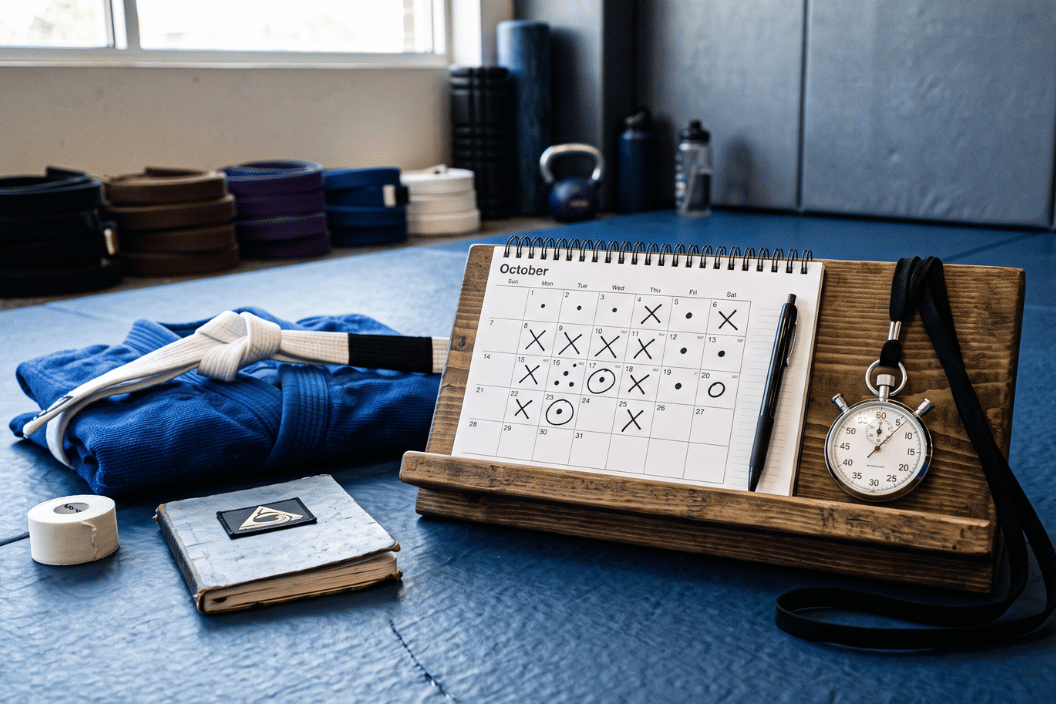
Two to three sessions a week is a solid starting point. It is enough to build skill and conditioning while still leaving recovery time between classes.
Start Your BJJ Journey at SJJC
The best way to find out whether BJJ is for you is to talk it through with someone who teaches it. The first step at Southside Jiu Jitsu Club is a free goal-setting consultation, a relaxed conversation about what you are looking for and how to start. No commitment, no pressure. When you are ready, book a free consultation and we will take it from there.
Previous Blogs