Does BJJ Break Down Your Body Over Time?
Brazilian jiu-jitsu is one of the few physical practices you can realistically pursue for decades. People train into their 50s and 60s regularly, and the ones who do aren't outliers or genetic exceptions. They figured out early that longevity on the mat is mostly a product of how you train, not just that you train.
The honest answer to the question is yes: BJJ makes real physical demands. Knees, shoulders, fingers, lower back - these areas absorb training load over time. But the difference between a practitioner who trains for 20 years and moves well and one who's hurting by year three is almost never the sport itself. It's the habits built around it.
Areas of the Body BJJ Impacts Most
Knees and Hips
Research consistently identifies the knee as the most common injury site in BJJ. Guard play, passing, and takedown defense all load the knee repeatedly and in multiple directions. Hips absorb sustained stress from ground transitions and positional movement that doesn't resemble anything most people do in daily life. These areas hold up well with proper preparation and load management. They break down when rolled hard every session with no recovery between.
Shoulders and Neck
Shoulder injuries are among the most common in BJJ, particularly from arm locks applied quickly or resisted past the point of control. The neck takes stacking loads, choke defense pressure, and inversion stress during guard work. Over time, and without anything done to counterbalance those demands, this becomes chronic tightness or something more serious.
Fingers and Hands
Gi training is particularly hard on the fingers. Years of fighting grips and catching submissions leave most long-term gi practitioners with thickened joints and reduced range of motion. This is largely an occupational reality of grappling, but it can be slowed with mobility work and intentional grip management during training.
Lower Back
Guard work and bridging load the lumbar spine on a loop. Spinal rotation under load is constant. Without posterior chain work off the mat, the muscles that support and protect the lower back weaken over time, and chronic pain follows that weakness.
Where Most of the Damage Actually Comes From
A peer-reviewed cross-sectional survey of 1,140 BJJ athletes published in 2021 found that two out of three reported at least one injury within a three-year period that caused a two-week absence from training, and that most injuries occurred during sparring. That number tells part of the story. The more important part is that most of those injuries were preventable.
The patterns behind preventable BJJ injuries are consistent across the research and across gyms.
Ego-driven rolling is the single biggest driver. Fighting a submission past the point you should have tapped. Going maximum intensity every session because it feels like the thing to do. These habits don't build toughness. They build an injury history.
Skipping the warm-up and cool-down is the next issue. BJJ has a culture of getting on the mat and going. Missing the preparation phase leaves joints unprepared for load and movement patterns unprimed. Missing the decompression afterward keeps the nervous system running in an elevated state, which slows recovery and compounds fatigue across sessions.
No off-mat work is the third pattern. BJJ develops the anterior chain: hip flexors, core, chest, front shoulders. Left unbalanced, the posterior chain, meaning the glutes, spinal erectors, hamstrings, and rear shoulder muscles, becomes underactive. That imbalance doesn't announce itself. It builds quietly and tends to show up as a lower back problem or a shoulder issue well into year two or three of training.
Training frequency without recovery built in rounds it out. BJJ is addictive and the instinct is often to train more. More training without more intentional recovery produces less adaptation and more cumulative breakdown.
Preventing overtraining in BJJ →
Emphasis on 'How' You Train BJJ
This distinction is worth sitting with. BJJ as a discipline makes real demands. The joint locks require that you tap. The positional demands require movement patterns your daily life doesn't prepare you for. The grappling contact requires physical resilience to develop over time.
None of that means the sport is categorically hard on the body. It means the sport requires you to manage your body the way any demanding physical practice does, and that practitioners who do that train well into their 50s and beyond.
The practitioners who accumulate serious long-term damage are, more often than not, the ones who treated every round like the final of a major tournament, ignored the tap, and decided that recovery was for people who weren't committed enough.
What Smart Long-Term Training Looks Like
Tap When You Need To - Listen to Your Body
There is no position worth a torn ligament. Tapping is information: it tells you where you were caught and gives you a chance to get back on the mat and work on it. Fighting a submission once you're behind is how joints get damaged. Train with people who respect the tap and use yours without hesitation.
Manage Intensity Over the Week
Not every round needs to be a war. Positional sparring, flow rolling, and drilling all build skill with far less cumulative wear than full-intensity sparring across every session. A well-structured week has variation. Hard rounds have their place. So does restraint.
Build Strength and Mobility Off the Mat
The most durable grapplers supplement BJJ with strength work. The programming doesn't need to be elaborate. Compound movements that develop the posterior chain, deadlifts, squats, rows, hip hinges, alongside consistent mobility work targeting the hips, shoulders, and thoracic spine, make a significant difference in how the body absorbs and recovers from training.
Nutrition is also a key component off the mats and something that we help guide all members on at SJJC. Nutrition guidance and hydration are a part of your experience with us from the very first consultation. Check out our guide on nutrition and hydration →
Warm Up Deliberately and Cool Down Consistently
A thorough warm-up prepares joints for load and activates the movement patterns you'll use during class. A consistent cool-down tells the nervous system the training session is finished and begins the recovery cycle. Much of the cumulative wear that builds in long-term practitioners starts in the gaps between these two habits.
How Structure Protects You at SJJC
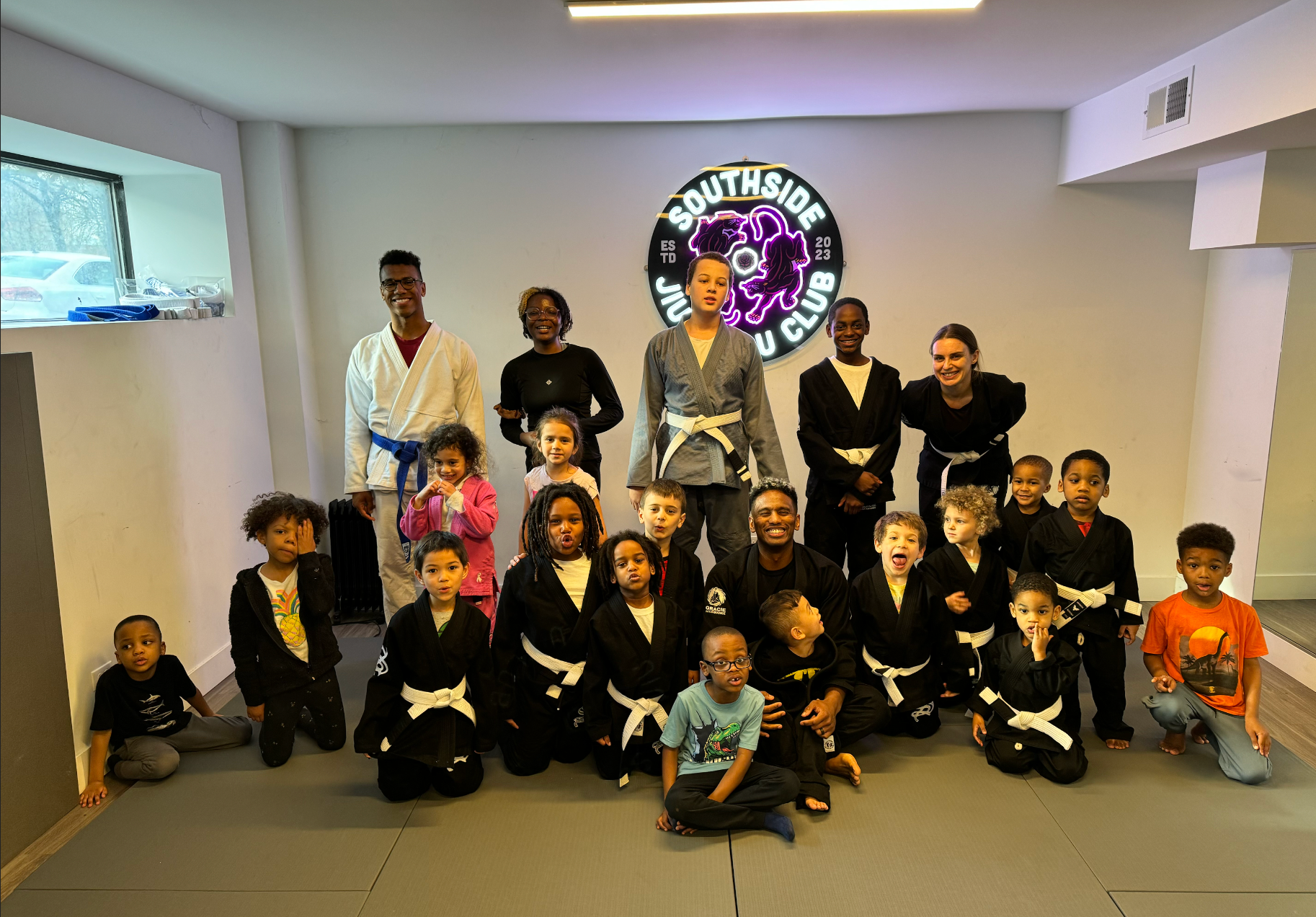
When new members join Southside Jiu Jitsu Club, they don't go straight into open sparring with experienced practitioners. The 6 Week Transformation Challenge is the starting point for everyone, and it's built as an on-ramp: structured classes, coaching on technique and movement, and a progression that builds habits before it adds intensity.
New students attend BJJ Fundamentals and All Levels classes with direct coaching attention on how they move. That structure matters for longevity. Practitioners who learn to move correctly from the start, and who develop habits around tapping, pacing, and listening to their bodies, accumulate far less of the damage that ends up derailing people who come in without guidance and figure it out on their own.
The FUJI spring-floor mats at our facility contribute to that as well. The spring floor system cushions joint impact from falls, transitions, and guard work in a way that compressed foam systems don't. It's a small factor per class and a meaningful one across years of training.
The coaching team at SJJC stays actively involved in how members develop. Consistent check-ins, attention to technique, and a culture that doesn't reward ego-driven rolling are all part of how the gym is run. The goal is practitioners who can train for a long time, because that's the only way the practice actually works.
Frequently Asked Questions
Is BJJ hard on your knees?
It can be. The knee is the most commonly injured joint in BJJ, and guard work, passing, and takedowns all load it repeatedly. Smart training habits, including proper warm-up, load management, and tapping without hesitation during leg attacks, significantly reduce that risk. Structural problems are far more common in practitioners who grind through pain rather than address it.
Can I start BJJ if I'm older or have existing injuries?
In most cases, yes. The free consultation at SJJC is the right place to have that conversation in detail. Existing injuries affect which positions and training intensities make sense for where you are now. Many practitioners begin BJJ later in life and train safely for years when the approach is calibrated to their situation from the start.
Does gi or no-gi training affect injury risk?
Research suggests no-gi carries somewhat lower risk of ankle injury, since the grip-fighting demands of the gi can create additional torque on the lower extremities. Both formats carry real injury risk. Training habits and technique matter far more than the format.
How many days a week should I train to stay healthy long-term?
Two to three sessions per week is the right starting point for most people. As fitness and technique develop, BJJ training frequency can increase, but recovery has to scale with it. More training requires more intentional recovery time, not just more mat time.
Previous Blogs