Should I Do BJJ or Boxing?
If you are choosing between BJJ and boxing, it helps to know they are not really built to do the same thing. Boxing is a striking art, all about distance, timing, and fast hands. BJJ is a grappling art, built around control and leverage once a fight gets close. Both will get you in shape, teach you to stay composed under pressure, and give you skills you will actually use. Which one is right comes down to what you want out of training: the kind of self-defense you are after, the way you like to work out, and how you want to progress over time. For anyone whose main goal is protecting themselves, our breakdown of jiu jitsu for self-defense is worth reading alongside this.
BJJ and boxing solve different problems
The clearest way to understand the two is to look at the range each one is built for.
Boxing is a striking art. It trains you to manage distance, throw fast and accurate punches, slip and counter, and read an opponent's movement. It is sharp, athletic, and demanding, and good boxing footwork carries over to almost everything else you might train later.
Brazilian Jiu Jitsu is a grappling art. It trains you to close distance, control another person's body, and finish a confrontation with leverage rather than strikes. The whole system is built around what happens when a fight gets close or ends up on the ground, which is where a large share of real altercations actually go.
Neither approach is a watered down version of the other. They're entirely separate and are answers to different questions. Boxing asks how you win at range. BJJ asks how you win once range disappears.
Which is better for self-defense?
This is the most common reason people compare the two, so it deserves an honest answer rather than a sales pitch.
Boxing has real defensive value. Fast hands, good head movement, and the awareness to keep distance are genuinely useful, and a trained puncher can end a confrontation quickly. The tradeoff is that trading strikes is a high-risk way to handle a real situation. Punches can be answered with punches, and even a skilled striker can get caught by an untrained swing.
BJJ takes a different path. By closing the gap and controlling an opponent's body, you take away much of their ability to hurt you, and you can often manage the situation without throwing a single strike. That control also gives you options. You can hold someone in place, create space to leave, or end things with a submission, applying only as much force as the moment calls for. For everyday people who want to protect themselves without turning every encounter into a brawl, that measured control is a big part of why BJJ gets recommended so often.
The honest conclusion most coaches land on is that the two complement each other, and plenty of serious students eventually train both - especially if they're competing in MMA (mixed martial arts). If you can only start with one, BJJ gives most beginners the more forgiving and more controllable skill set for self-protection.
Which is better for fitness?
Both BJJ and boxing will get you in excellent shape, and both will humble you quickly.
Boxing leans toward explosive, high-output conditioning. Rounds on the bag, pad work, and footwork drills build cardio, shoulder endurance, and fast-twitch power. It is a fantastic way to burn energy and sharpen coordination.
BJJ is full-body problem solving under fatigue. A hard round of rolling works your grip, hips, core, and legs while your brain is busy solving a live puzzle against a resisting partner. Most people are surprised by how quickly their conditioning improves once they start training regularly, partly because every session is different and you rarely notice how hard you are working.
If you want a workout that feels like sport and strategy at the same time, BJJ tends to keep people coming back longer. If you love rhythm, output, and the feel of clean striking, boxing is hard to beat.
Which is easier to start as a beginner?
The learning curves are shaped very differently, and this matters more than most beginners expect.
Boxing has a faster on-ramp. You can learn a usable jab, cross, and basic guard in a few sessions and feel competent quickly. The catch arrives later, because progressing usually means sparring, and sparring means getting hit. For a lot of adults, repeated contact to the head is a real consideration, especially if training is meant to be a long-term part of life.
BJJ has a steeper early curve. There is more to absorb at the start, and your first few weeks can feel like learning a new language. The upside is that you can train at full effort from very early on without taking strikes to the head. You roll, you make mistakes, you tap, you reset, and you learn fast precisely because the feedback is immediate and the risk profile is lower. Training smart from day one is much easier in a grappling art. Being part of a strong BJJ community is important here - that support helps you grow alongside others.
Choosing BJJ or Boxing to Fit your goals
Strip away the debate and the decision gets simple. Match the art to what you actually want.
List of Services
-
Brazilian Jiu JitsuList Item 1
Start with BJJ if you want self-defense built on control, a workout that doubles as live strategy, and a path you can train hard on for decades without accumulating head contact.
-
BoxingList Item 2
Start with boxing if you are drawn to striking, you love high-output cardio and footwork, and your main goal is sharp hands and conditioning.
-
Train Both
Train both, eventually, if you want a complete striking and grappling foundation. Many people begin with one, get comfortable, and add the other later.
For most adults starting fresh, especially anyone who wants something sustainable and beginner-friendly, BJJ is the more forgiving entry point. You can show up with zero athletic background and be training meaningfully within your first class.
Training BJJ on Chicago's Southside
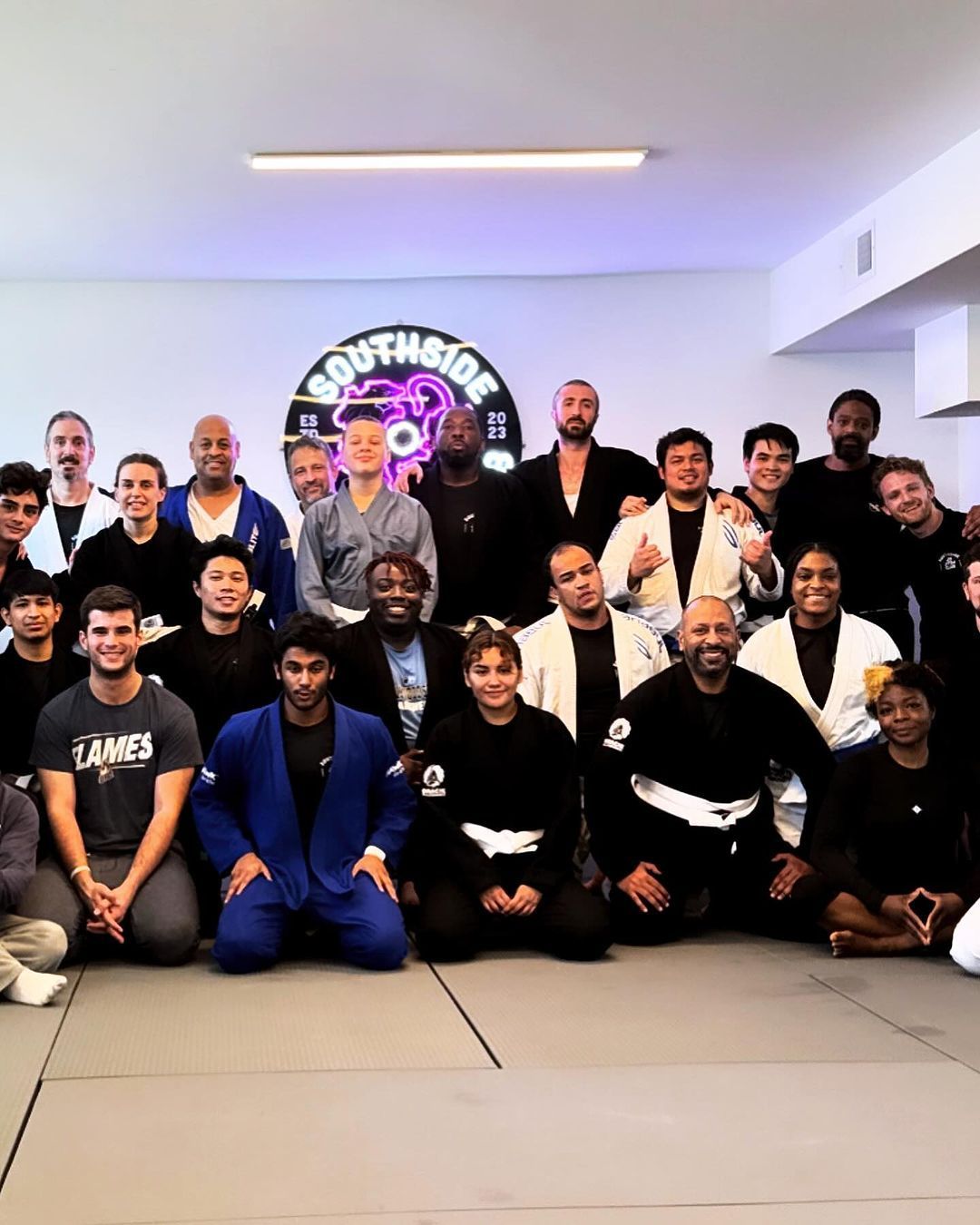
If BJJ sounds like the right fit, the first step at Southside Jiu Jitsu Club is a free goal setting consultation. You come in, see the facility, meet the coaches, and talk through what you want out of training, all with no pressure and nothing to prepare. It is the starting point for every new student.
From there, new students begin with the 6 Week Transformation Challenge, the on-ramp that eases you into things before you take on a full membership. Over the six weeks you train a mix of BJJ Fundamentals, All Levels, and, if you prefer a women-only room, Women's Jiu Jitsu classes, paired with goal setting and accountability so you are not guessing your way through the first stretch.
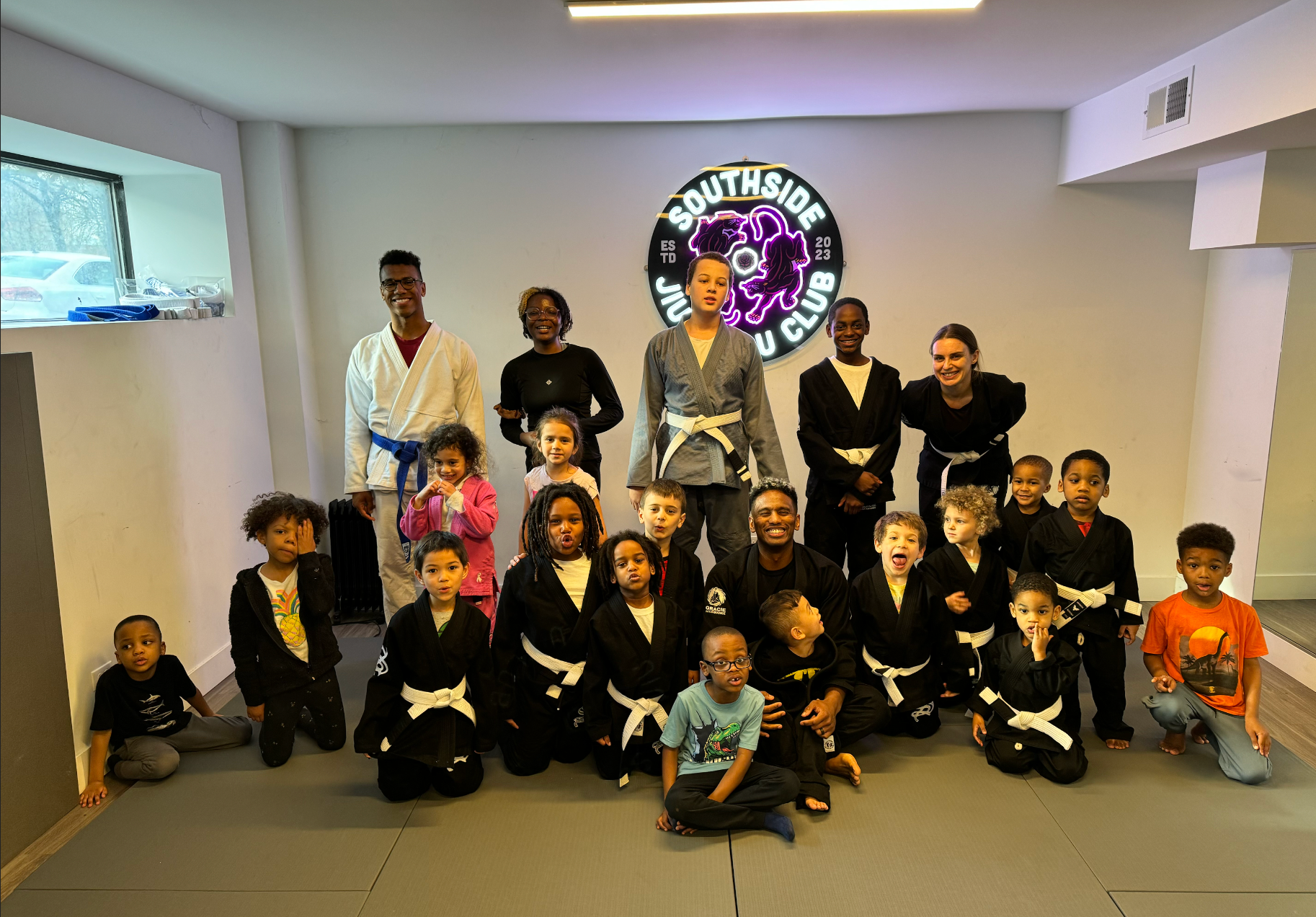
Once you finish the Challenge, you graduate into full Prime Membership. The academy is led by founder and head instructor Solo Dixon, a 1st degree black belt under Adem Redzovic, and the mats are a FUJI spring floor system chosen for safer landings while you learn. Beyond the technical side, the room is a real community on Chicago's Southside, serving Woodlawn, Hyde Park, Bronzeville, South Shore, Kenwood, Chatham, and other areas around Chicago.
The best way to find out if BJJ is for you is to come see the room and talk through your goals. Book a free consultation and we will help you take the first step.
Frequently asked questions
Is BJJ or boxing better for a complete beginner?
For most adults with no background, BJJ is the more forgiving start. You can train at full effort early without taking strikes to the head, while still getting an excellent workout. Boxing is quicker to feel competent in, but progressing usually means sparring and contact.
Can I train BJJ and boxing at the same time?
Yes, and many people do once they have a base. The two cover different ranges, so together they make you more well-rounded. If you are just starting, getting comfortable in one first is usually easier than splitting your focus on day one.
Which burns more calories, BJJ or boxing?
Both are demanding full-body workouts, and the harder you train, the more you get out of either. Boxing leans toward explosive output, while BJJ is sustained problem solving under fatigue. Most people stop tracking calories once they realize how quickly their overall conditioning improves.
Is BJJ enough for self-defense on its own?
For most everyday situations, BJJ gives you a strong foundation, because controlling an opponent takes away much of their ability to hurt you and lets you decide how the encounter ends. Where it is not a complete system is standup striking and scenarios with more than one person, which is why awareness, staying on your feet when you can, and simple de-escalation still matter. Plenty of people train BJJ as their primary self-defense skill and are well served by it, and some later add striking to round out the gaps. For a beginner who wants one dependable skill set that works up close, BJJ holds up well on its own.
Previous Blogs