How to Choose a Kids' BJJ Program: Age & Goals
Walk into any search for kids' martial arts and the options pile up fast. Jiu jitsu, karate, taekwondo, and half a dozen gyms within driving distance, all promising confidence and discipline. Narrowing that down to the right fit for your specific child is the actual work, and it is worth doing well. The wrong program can turn a kid off movement for years. The right one becomes the thing they ask to go to.
This is a guide to making that choice on purpose. Not which gym has the flashiest website, but how to line up your child's age, temperament, and what you actually want them to get out of it with a program built to deliver it.
Start With Your Child, Not the Program
The most common mistake parents make is picking the program first and hoping their kid adapts to it. Flip that. A shy six year old and a high-energy ten year old need different things from their first months on the mats, and a good program meets each of them where they are.
Before you compare gyms, get honest about two things: where your child is developmentally, and what you are hoping training does for them. Those two answers point you toward the right room faster than any list of class times ever will.
Match the Program to Your Child's Age and Stage
Age is a starting point, not a rule. Readiness matters more than the number on a birthday cake, and it varies from kid to kid. That said, here is roughly how age maps to what a child gets out of training at any quality program.
List of Services
-
Ages 4 to 6: Coordination, Listening, and PlayList Item 1
At this stage the goal is not technique, it is groundwork. Following instructions, taking turns, controlling their body, and learning that effort feels good. Good classes for this age look like structured play with real skills hidden inside. If a program is drilling little kids like miniature adults, keep looking.
-
Ages 7 to 9: Real Technique and StructureList Item 2
This is where jiu jitsu starts to click. Kids can absorb actual positions, remember sequences, and handle a class with a clear beginning, middle, and end. You want a program that balances genuine instruction with enough fun to keep them coming back, and coaches who can hold a room of this age without losing them.
-
Ages 10 to 14: Sparring, Sport, and OwnershipList Item 3
Older kids are ready for live training, controlled sparring, and the problem-solving that makes jiu jitsu addictive. This is often where confidence gains show up hardest, because the child is testing themselves against a resisting partner and learning they can handle it. Look for supervised, age-appropriate sparring rather than a free-for-all, and a curriculum that keeps building instead of repeating the same handful of moves.
-
Teens: Toward the Adult RoomList Item 4
Teenagers can often train alongside adults or in a bridge program. The right fit depends on maturity and the gym's culture, so ask how they handle the transition rather than assuming.
Not every gym splits kids into tight age brackets. Some run separate age groups, others run a single all-levels youth class where coaches adjust to each child within the room. Neither is automatically better. What matters is whether the coaching is genuinely age-appropriate and individualized.
Communicate Your Goals For Your Kid in BJJ
Different goals point to different instruction. Think of yours before you visit, because it changes what "good" looks like for your child's experience.
If your main goal is confidence for a shy or anxious kid, prioritize a warm, patient environment over a competition powerhouse. If it is discipline and focus, look for structure, clear expectations, and coaches who hold kids to them.
If you are drawn to jiu jitsu specifically for what it teaches kids about handling bullying, you want a program that trains real, controlled grappling rather than choreographed forms, because the broader benefits kids pull from consistent training come from actually doing the thing under mild pressure.
If the goal is burning off energy and building fitness, almost any active program works, so weight the schedule and the vibe. And if your child is already competitive and wants to test themselves, then a gym with a real sport program and older training partners matters.
There are no wrong goals here. There are only mismatches between what you want and what a given program is built to do.
What a Good Kids' BJJ Program Looks Like
Once you know your goals, the real question is what makes a youth program worth committing to. A few things separate a serious gym from a room with mats and a babysitter.
It starts with the coaches. Real jiu jitsu credentials matter, and so does genuine training in how to work with children, because coaching kids is its own skill. A great competitor is not automatically a great kids' coach. The programs worth your child's time are led by instructors who can hold a room full of energetic seven year olds and still teach real technique, with enough coaches on the floor that no child gets lost in the shuffle.
Structure is the next marker. Good programs run on a clear curriculum that builds logically over time, revisiting fundamentals while layering in new skills, instead of a random technique each day with no thread connecting them. That structure is what turns a fun afternoon into steady progress a parent can actually see.
Safety is not something a serious program merely advertises. It is built into how every class runs: controlled, supervised sparring matched to each child's age and size, coaches who prioritize control over intensity, and a real training floor underfoot. Quality mats matter far more than most parents realize, since kids spend the whole class getting taken down and getting back up.
And a good program is confident enough to let you see it firsthand. The best ones welcome your family in for a first session before any commitment, because they know the environment speaks for itself once your child steps on the mat.
Red Flags to Watch For
A few things should give you pause: high-pressure sales for long contracts on day one, sparring that looks unsupervised or too rough for the age group, a trophy-first culture that pushes competition over fundamentals, coaches who cannot clearly explain how they adapt to different ages, and any program that will not let your child try a class first. None of these are automatically disqualifying on their own, but together they tell you a lot.
Questions to Ask Before Enrolling Your Child
Bring these to any gym you visit:
- How do you group kids by age or level, and why?
- What training and background checks do your youth coaches have?
- How is sparring supervised for my child's age?
- What does the curriculum look like over a few months?
- What does a typical class actually run through?
The answers, and how comfortable a gym is giving them, tell you almost everything.
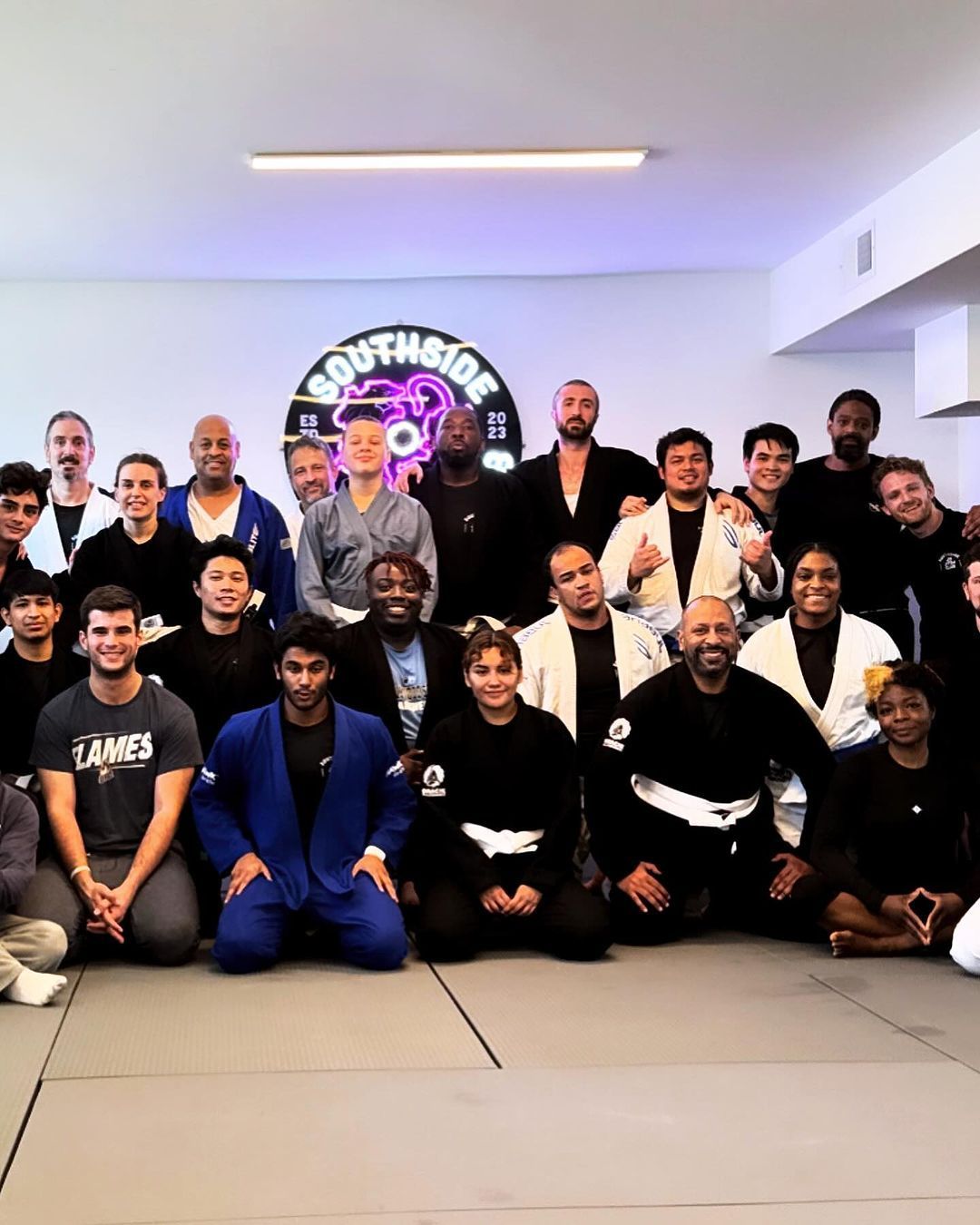
How This Works at Southside Jiu Jitsu Club
Our Youth BJJ program at Southside Jiu Jitsu Club is built around the priorities above. Kids ages 4 to 14 train in a 45-minute all-levels class that follows a 16-week rotating curriculum, so coaches meet each child where they are while keeping the whole room moving through a real progression rather than a random technique of the day.
The focus is confidence, discipline, and respect, developed through age-appropriate drills, partner work, games, and guided sparring. The coaches are experienced in child development and safety, not just jiu jitsu, and training happens on a FUJI spring floor system that takes real impact out of every takedown and scramble. The academy is led by head instructor Solo Dixon, a black belt under Adem Redzovic.
Every family starts the same way, with a free goal setting consultation. It is a straightforward conversation about your child's age, considerations, and what you want them to get out of training, which is exactly the matching work this guide is about. From there the coaches can tell you honestly whether it is the right fit.
Previous Blogs