How to Get the Most Out of Open Mat BJJ
Open mat is the part of the week where nobody tells you what to do. No warm-up call, no technique of the day, no coach counting down positional rounds. For a lot of people that freedom quietly turns into forty-five minutes of hard rolling and very little learning. Used well, it is the fastest place to close the distance between what you know and what you can actually pull off against someone who is trying to stop you. The difference comes down almost entirely to what you walk in with.
Open Mat Is Unstructured, Not Unplanned
The word randori comes from Japanese martial arts and translates roughly to free practice. Free is the operative word. It does not mean aimless.
The most common way to waste open mat is to show up with no intention, find the hardest rounds available, and survive them one after another until the session ends. You leave sweaty, sore, and no better than when you arrived. You reinforced whatever you already do under pressure, which for most people is a short list of habits, some of them bad.
The alternative is not complicated. You decide ahead of time what the session is for, you choose partners who help you get there, and you protect enough energy to actually think while you are rolling. That is the whole method. Everything below is detail.
Pick One Thing to Work On
One theme per session. Not five. A single focus survives contact with a resisting partner. A list does not.
Goals Narrow Enough to Test
- Retaining guard against a standing pass, specifically
- Getting to a functional grip from bottom half before your partner settles
- Finishing from the back without abandoning the seatbelt
- Escaping side control before the crossface is locked in
- Getting to your feet after a sweep instead of staying seated
Each of these gives you a clear answer by the end of the session. You either found the grip or you did not. You either got out early or you got flattened. That is information you can bring to your next class.
Goals Too Broad to Be Useful
"Work on my guard." "Get better at passing." "Roll more." These are not goals, they are categories. You cannot tell whether you succeeded, so the session produces no feedback, and without feedback you are just accumulating mat time.
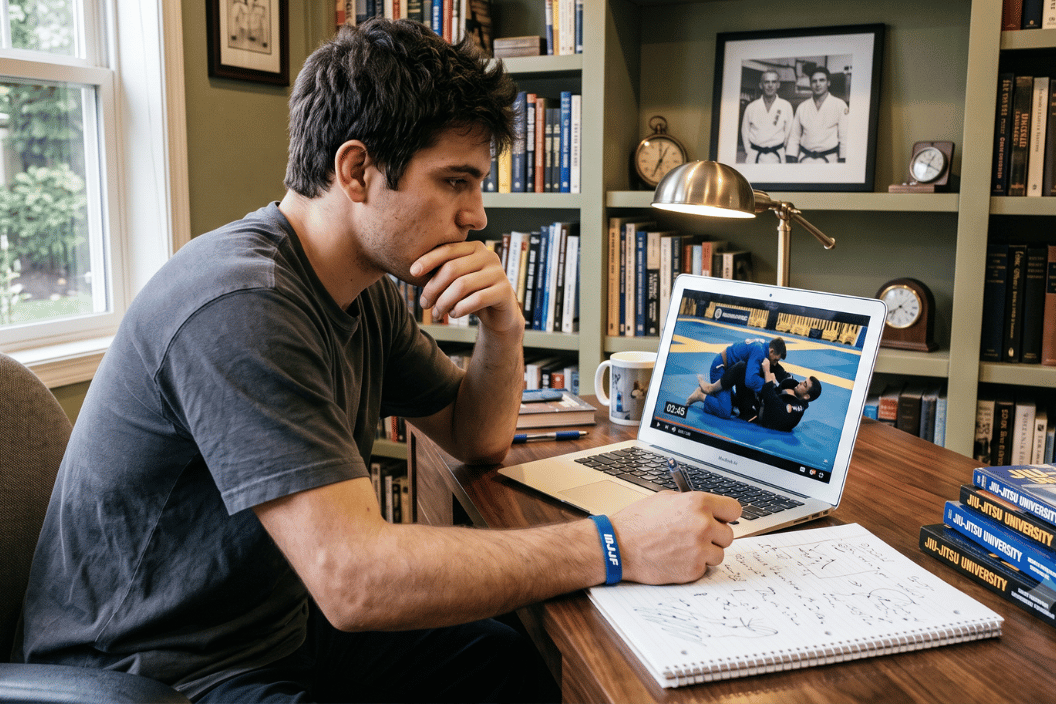
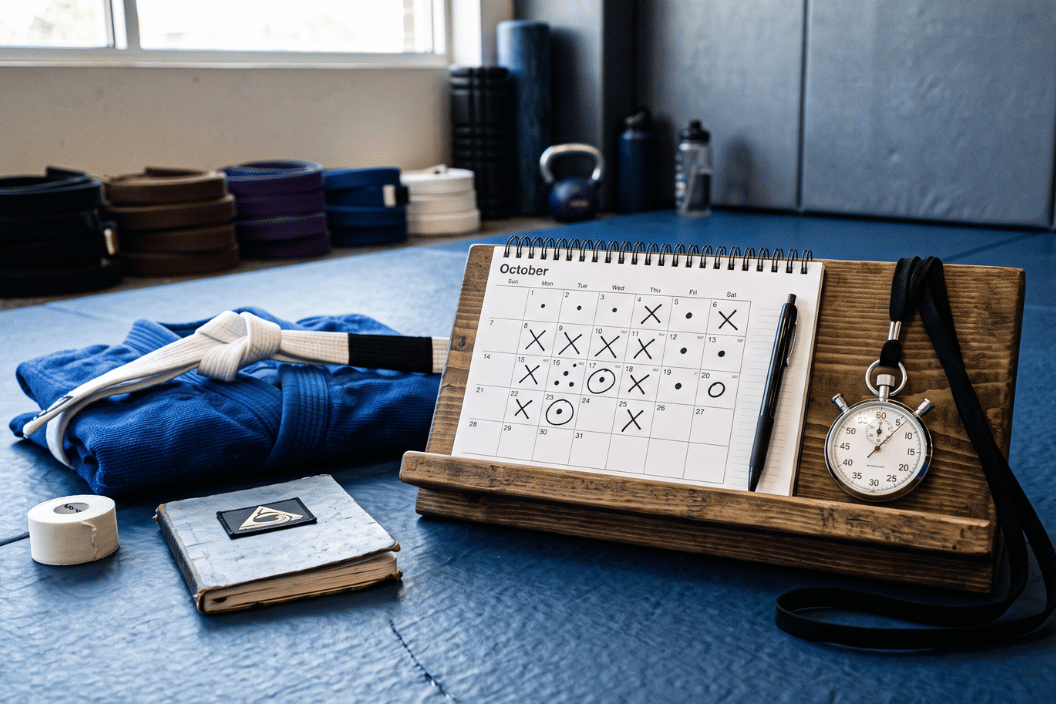
If you keep a training journal, this is what it is for. Pull the position you got stuck in most recently and make that the whole session.
Choose Your Partners on Purpose
Partner selection is a training decision, not just a social one. Most people default to their two or three regular partners, which is comfortable and limits what you learn.
Match the partner to the objective:
- Working on escapes and frames under pressure? Roll with someone heavier than you. You want the problem to be real.
- Working on guard retention? Find a technical upper belt with a good passing game. They will expose the gap immediately and without hurting you.
- Testing offense you are confident in? Roll with someone close to your size and level, where the outcome is genuinely uncertain.
- Testing something brand new and awkward? Roll with a newer partner first. Low stakes, low speed, room to fail badly a few times before it starts working.
Rotate deliberately. If you rolled with the same person three rounds in a row, you probably stopped learning around round two. And if you are a higher belt, part of your job on the mat is giving newer students a round that teaches them something instead of one that just ends quickly.
Set the Intensity Before the Round Starts
This is a ten second conversation that almost nobody has, and it prevents most of what goes wrong at open mat.
Before you slap hands, say what you are looking for. "I want to go light and work positions." "I want a hard round, are you up for that?" "I am coming back from a rib thing, can we keep the pressure off my left side?" Then listen to what your partner says back, and honor it.
Two failure modes disappear when you do this. The first is the mismatch where one person thinks it is a flow round and the other is training for a competition. The second is the slow escalation, where a light round drifts harder every ninety seconds until somebody gets hurt over nothing.
Default to lighter than you think you need. Hard rounds are useful, but they are a specific tool for a specific purpose, and they cost more than most people account for.
Build a Structure for the Session
Nobody is going to structure the time for you, so structure it yourself before you step on the mat.
For a Short Session
Around forty-five minutes moves fast. A workable split:
- Five to seven minutes moving on your own. Hip escapes, bridges, getting warm enough that your first round is not your warm-up.
- Two rounds of positional work tied to your focus. Start in the bad spot, reset when you get out or get finished.
- Two or three free rounds where you look for the same position live.
- Two minutes at the end to note what happened while it is still fresh.
For a Longer Session
When you have ninety minutes or more, add a drilling block up front. Ten to fifteen minutes of repetitions on the entry or escape you are focused on, with light resistance, before you go live. Then follow the same pattern. Longer sessions also give you room to sit out a round and watch, which is worth more than most people expect.
Either way, decide the shape before you arrive. Making the plan on the mat almost always turns into rolling whoever is closest.
Use the Time Between Rounds
The gaps between rounds are training time, not dead time.
Sit down and get your breathing back under control before the next round rather than standing and gasping through a conversation. Drink water. Then spend at least one of those breaks watching a round you are not in, ideally between two people who are better than you. Watching from the outside shows you timing and grip sequences that are invisible when you are the one being passed.
Keep the notes short. One line in your phone after a round beats a detailed write-up you never actually do. "Lost the underhook every time he stood up" is enough to build a question for your next class.
Etiquette That Keeps the Mat Worth Showing Up To
None of this is complicated, and all of it matters more without a coach running the room.
- Ask before you roll. Do not grab someone mid-conversation or assume availability.
- Respect the tap instantly, every time, with no extra pressure and no last squeeze.
- Tap early on anything you cannot see coming, especially leg entanglements and anything on your neck.
- Watch your space. Know which pairs are near you, and stop and reset if you are drifting into them.
- Do not coach unless you are asked. An unrequested lecture after a round is the fastest way to become the person nobody rolls with.
- Show up clean, with short nails and no jewelry. Cover any open skin.
- Match your partner's energy. If they are moving at fifty percent, meet them there.
If you are visiting from another gym, all of the above applies double. You are a guest, and the way you roll is the only impression anyone gets.
When to Skip Open Mat
Open mat is optional volume stacked on top of your regular classes, and that is exactly why it is the first thing to cut when your body is telling you something.
Skip it if you are carrying an injury that would change how you roll, if you slept badly enough that your reactions are off, or if you are already at the edge of the training load you can recover from. Rolling with degraded coordination is where a lot of injuries actually happen. If you are unsure how many sessions a week you should be training, or you are noticing the early signs of overtraining, sort that out before you add more mat time.
Coming back after time away is a different situation with its own approach. Ease into open mat rather than using it as your reentry point.
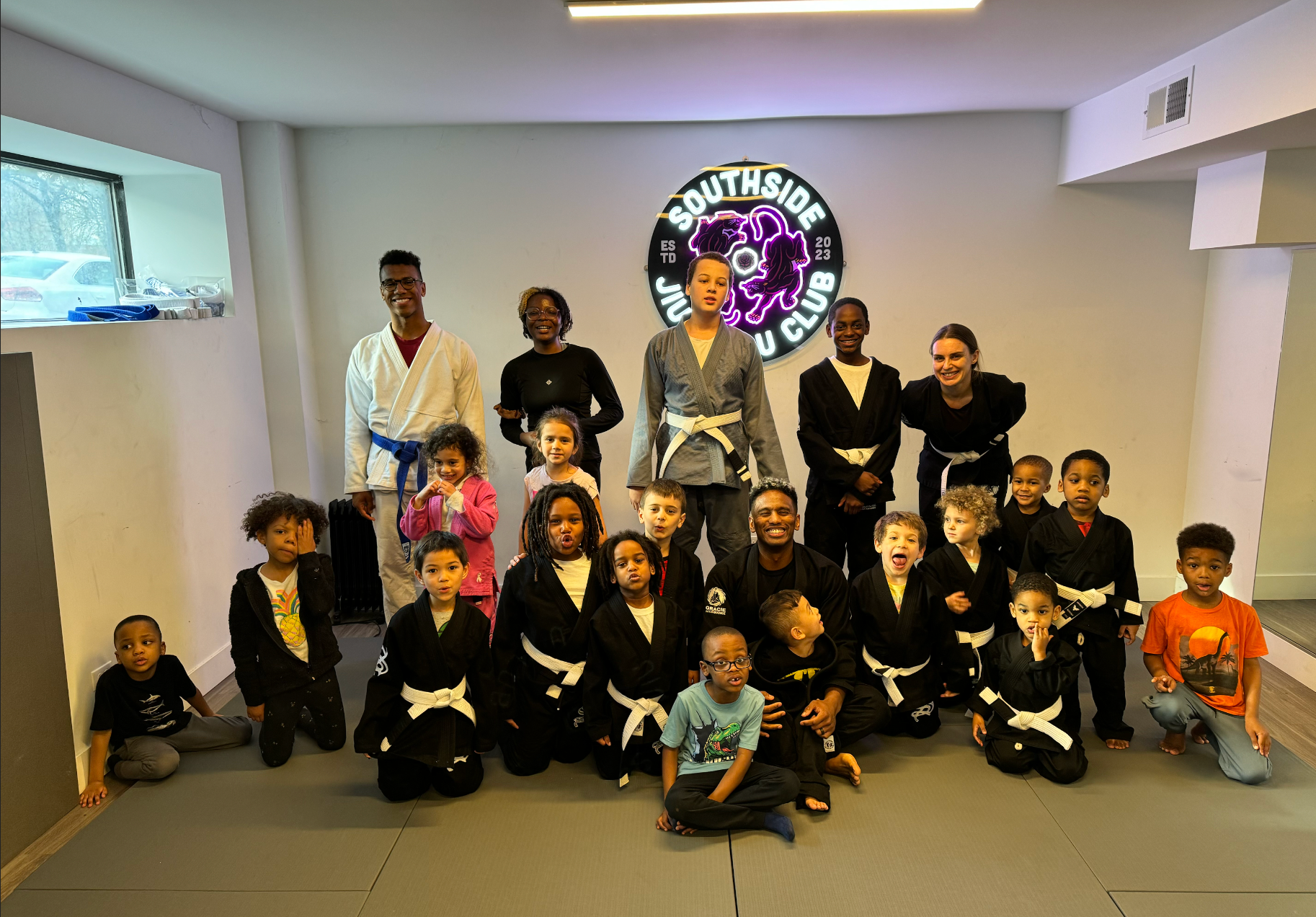
What Randori Looks Like at Southside Jiu Jitsu Club
Randori sessions at SJJC run the full period as open mat. No lecture, no curriculum, no guided drilling. You show up, find partners, and use the time however you decided to use it. Sessions rotate between Gi and No-Gi depending on the schedule, so check before you pack your bag.
There is an experience minimum: thirty prior classes or six months of grappling. That floor exists for a reason. Open mat without a coach directing traffic only works when everyone on the mat already knows how to move safely and take care of a partner. It keeps the room productive for the people who are there to train and safe for everyone in it.
The mats themselves are a FUJI spring floor system, which matters more at open mat than anywhere else on the schedule. Volume adds up, and the surface you take repeated falls on is not a small detail over a training year.
Drop-ins are welcome. If you are training in Chicago or passing through the Southside and want rounds, the experience requirement still applies, but membership is not required. Head instructor Solo Dixon is a first degree black belt under Adem Redzovic, and the mat culture here reflects that: technical, hard when you want it to be hard, and safe by default.
If you are newer than the thirty class threshold, the path in starts with a free goal setting consultation, moves into the 6 Week Transformation Challenge, and graduates into Prime Membership with the full class schedule available to you. Randori will be there when you are ready for it.
Frequently Asked Questions
Do I Need to Be a Certain Belt Level to Attend Open Mat?
Belt rank matters less than mat time. Many academies, SJJC included, set an experience minimum rather than a belt requirement. At SJJC that threshold is thirty classes or six months of grappling. Structured classes are the better environment before that point.
Should I Drill or Roll at Open Mat?
Both, in that order. Drilling first while you are fresh gets you clean repetitions, and rolling afterward tells you whether the movement holds up against resistance. If you only have time for one, choose based on your goal for the session, not on which one sounds more fun.
How Many Rounds Should I Do?
Fewer good rounds beat more mediocre ones. Three to five focused rounds with real recovery between them will teach you more than eight rounds of survival. Stop when your technique starts degrading, not when you are physically finished.
What If Nobody Asks Me to Roll?
Ask them. This is normal and expected, at every level. Walk up between rounds and ask directly. Upper belts are not waiting to be challenged, they are waiting to be asked, and most of them are happy to give you a round.
Can I Go to an Open Mat at a Gym Where I Do Not Train?
Usually yes. Most academies welcome visitors, and drop-in access is available at SJJC. Check the schedule and any experience requirements ahead of time, arrive early, introduce yourself, and roll conservatively for your first few rounds while you get a read on the room.
Train With Intention on Chicago's Southside
Open mat rewards the people who bring a plan to it. If you are looking for a room where the rounds are technical, the intensity is honest, and the mat culture is built to keep everyone training, book a free goal setting consultation and we will map out where you are and where you want to be.
Previous Blogs